Tuesday, April 16, 2019

SaaS Growth Strategies: How to Build Strategic SaaS Partnerships for Business Growth

SaaS partner program

While inbound and content marketing may be key to generating leads and pumping up your pipeline, the successful growth of a SaaS business depends on so much more than those techniques.

One proven way to accelerate SaaS growth is building a powerful partner program.

Don’t believe me? Take HubSpot, for example. With one of the most successful SaaS partner programs in existence, HubSpot has demonstrated the power of partnerships for rapid business growth. Soon after the partner program launched, it began generating a substantial amount of monthly recurring revenue with limited effort needed by HubSpot’s partner team. In fact, the first quarter of the program produced approximately 42 percent of the company’s customers and 33 percent of its revenue.

In today's post, we're going to take a deep dive into the key mechanisms, goals, structures and business questions that you need to consider when developing a SaaS partner program.

Why Are SaaS Partner Programs So Successful?

The B2B SaaS industry comes with a number of unique challenges that set the stage for partner programs to flourish:

  1. SaaS products are a significant investment.
  2. Because B2B SaaS investments typically affect multiple stakeholders, the buying process is notoriously cumbersome.
  3. Almost every software on the market has a bit of a learning curve and requires dedicated upkeep to avoid it becoming shelfware.

Partner programs can soothe some of these challenges by enabling other companies to sell your product on your behalf. For example, as a Diamond-Tier HubSpot partner, New Breed can sell, upsell, renew and service the HubSpot platform without ever needing to consult a HubSpot representative.

This kind of touchless sales cycle that occurs outside of your internal resources can reduce the cost of acquiring new customers and free up your internal team to pursue higher-value, more complex opportunities.

Plus, because we can onboard and service HubSpot customers on our own, we can help ensure that customers are using the platform to its fullest potential and getting the most return on their investment. In that way, a partner program can act not only as another sales channel but also as a client success channel.

Partner programs serve as a brand-building channel as well. Often, your partners will also be your customers and evangelists, so building a robust partnership network can create an engaged and dedicated community around your brand.

An important note: a partnership should be mutually beneficial

Yes, building a partner program can reap incredible rewards for your SaaS company — but it’s important to remember that the program should benefit your partners as well.

By offering attractive incentives like recurring revenue sharing, insider information such as product updates and discounted event tickets, you’ll help your program grow. Ultimately, the more successfully your partners can use, sell and extract value from your product, the more your partner program will contribute to your overall business growth.

Is a Channel Sales Partner Program Right For My Company?

Before diving in any further, you need to determine whether or not a channel sales program is a good fit for your company in the first place.

When making this decision, consider:

1. How much training and support does your product require?

The easier your product is to use, the easier it will be for your partners to sell. However, that doesn’t mean that products with a complex onboarding process can’t be sold successfully via a channel partner.

Ultimately, the success of your partner program comes down to whether or not you’re providing the right training, resources and support to your channel partners to sell the product on your behalf.

2. Will you be able to effectively train your partners to sell your solution?

You need to have the infrastructure in place to train and support your channel partners.

Typically, companies will assign a partner program manager or a channel account manager to act as the liaison between your company and your partner companies. Similar to a customer success manager, this person is tasked with ensuring the success and satisfaction of each partner, and they’re probably the one who’ll conduct training sessions if needed.

3. Is your product ready or are you still ironing out the kinks and building out important features?

Partner programs are a great strategy for scaling your business, not for gaining initial traction in the market.

Before you can implement a successful partner program, you need to have a well-developed minimum viable product that meets the needs of your target market. You should be familiar with your ideal customer base and have an in-depth understanding of the sales cycle. If you can’t convey these important sales elements to your partners, then a partner program probably isn’t right for you.

4. Do you have a scalable and repeatable sales model internally?

If you’re struggling to develop a streamlined sales model for your internal sales team, then it’s unlikely you’ll be able to train your channel partners to sell your product successfully. Before you even think about developing a channel sales partner program, make sure you have your own internal ducks in a row.

The bottom line is: Companies that are still in the startup phase should not be investing in a channel sales program. Instead, startups should dip their toes into lower-stakes, more easily controlled partnerships like co-marketing or affiliate programs.

Access our webinar focusing on leveraging a partner program for all stages of SaaS business growth

How Do I Get Started With A Successful SaaS Partner Program?

Once you've decided that a channel sales program is right for your business, here are a couple challenges you should keep in mind as you work to get it off the ground:

  • Building partnerships with established resellers will take considerable time and effort up front. The pitch to your potential partners must illustrate that you clearly understand their business.
  • You will need to enable your partner's sales team to resell your product. Therefore, sales enablement content will be critical to success.
  • It will take time for your channel to start to generate revenue. In fact, it's not uncommon for it to take 12–18 months before you start achieving your channel goals.
  • The product-development feedback cycle from your partners will be slower than from your direct customers, which means you should make sure you've reached product-market fit before you commit to a partner network.

Don’t worry, though. These challenges are certainly not insurmountable. However, this will take time. Start experimenting with a small number of partners and reasonable customer goals, and then increase your partner personnel and marketing budget as your program proves successful.

As a SaaS company, you might want to offer your product for free or at a significant discount to partners to gain traction for the program. After all, giving value before you ask for value is a key component of any kind of inbound endeavor.

How Do I Establish Goals and Mechanisms For My Partner Program?

At a high level, the goal of your partner program should be to generate customers through this new channel (at least) as effectively as your internal sales efforts. To achieve this, you'll also need to be ready to track the same key metrics in your partner program as you do in your direct efforts (CLV, CAC, payback period, etc.).

Depending on the size and complexity of your partner program, you might want to hire a partner manager, invest in a tiered partner relationship platform like PartnerStack or both. For smaller, co-marketing or affiliate partner programs, you might not need something so robust.

The primary mechanism used to create a partner program must be a model that can be easily communicated to your channel partners and empower them to be working advocates for your product and brand, and rewarded as your company grows (while helping them grow their own).

This way, you can reach their networks as a trusted source and lower your cost of acquisition. If your resellers offer services that complement your platform, your partnership will also act as an outsourced customer success engine.

However, you need to determine internal figures before setting goals for the partner program. Assess your current business performance. Look at past data to understand your growth patterns and forecast based on those goals.

When you’re just starting out, don’t count on the success of your partner program. The infancy of your partner program is not a time to set goals that could make or break your business, but rather a time to start collecting data and creating benchmarks for your program in the future. As it becomes more robust and begins contributing more predictable revenue, then you can start forecasting partner goals for the future.

What Are the Different SaaS Partnership Models?

A great way to structure your partner program is using tier levels to acknowledge how successful a given partner has been in reselling your product. Tiered structures can also help create a competitive ecosystem that provides achievement levels and rewards, such as additional support from your channel team.

If you’re new to partnerships, you may want to experiment with different levels of involvement  and start building relationships without high risk. Co-hosting webinars, guest blogging and exchanging backlinks or social mentions in exchange for lead shares are great ways to get started, even well before your business is ready to scale.

How Do I Compensate My Partners For Their Involvement?

For the program to be successful, you'll need to have a clear financial model built out to compensate your agency partners. This model should be built based on your business's growth goals and align with your direct marketing and sales teams. This way, the partner program is being compared against the same metrics used across the organization.

It’s important to dabble in low-barrier monetary incentives before you implement a full-blown reseller program. For example, if a partner drives a lead to your website and that deal later closes, you could reward them with a flat rate of $200 or a revenue share percentage.

The best part is, these kinds of incentives don’t need to be restricted to your partner network. You could offer gift cards for customer referrals or affiliate companies to generate demand and interest in your partner program as it grows.

What Kind of Assets Do I Need to Create for My Partner Program to Be Successful?

Once you have the model and framework in place and have experimented and proven that the channel is viable for your business, it's time to take it to market.

Here are a few key assets you should create:

  • A public partner overview site page: This page should discuss the structure, goals, financial models and mechanisms of your partner program. It should talk about what you expect from your partners and what they can expect from you.
  • Partner sign-up landing page: This is where interested partner prospects can go to request to join your partner program, ask for more information or discuss different partnership models they might be interested in.
  • Brand asset/sales enablement library: This asset should be the go-to resource for your partners to find important information like brand guidelines, product messaging and updates. It could take many forms, such as an e-book, a partner forum, a Facebook group, etc.
  • Partner contact channel: Give your partners a simple way of contacting you in the case of discount questions, product troubleshooting or else. This could take the form of a chatbot, a form, or an account executive.
  • Marketing content: Depending on how robust and complex you hope your partner program to be, you’ll need to create content to market the partner program and generate interest.  
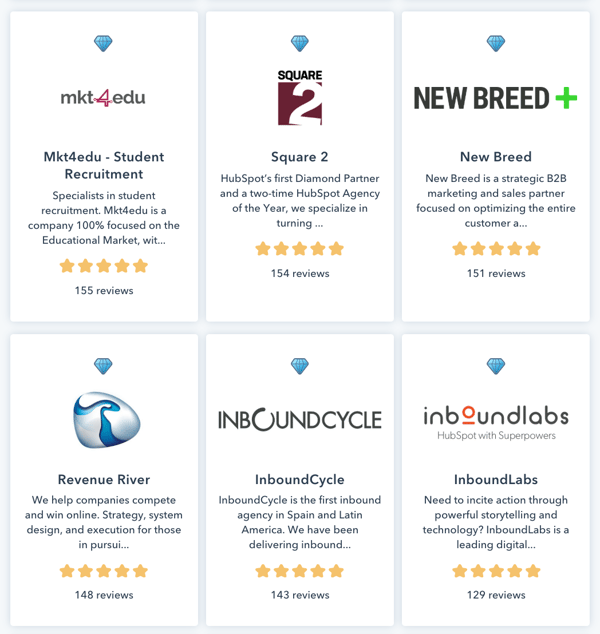
  • Partner-tier site page: This shows each of your partners’ statuses by tier. It doesn't show exactly how many customers or revenue each partner has generated, but provides high-level insight into everyone's standing. Here's an example from HubSpot. This provides great visibility for your partners, and also incentivizes them to reach the next tier level:
hubspot-directoryWith this business framework and your marketing assets ready, your business is now ready to launch its own partner program.

Remember, partner programs aren't right for every SaaS business and require a clear strategy and time to develop. Start small and set clear goals and performance indicators up front. When executed correctly, a successful partner program can be a huge driver of your business growth and the success of your customers.

webinar-call-to-action

Monday, April 15, 2019

Podcast Marketing: Build Your Audience to Promote Your Brand

podcast

A podcast is an audio recording available to download or listen to on various platforms and apps. Podcasts are similar to radio in many ways, except they’re pre-recorded and not live.

People have been using podcasts to listen and learn about topics varying from true crime to Hallmark movies to economics. Over the past few years, more and more businesses have started to use them to reach new audiences, and there are numerous statistics to support incorporating podcasts into your marketing strategy.

According to Podcast Insights:

  • 51% of the US population has listened to a podcast.
  • 27% of US podcast listeners have a 4-year college degree (only 19% of the total US population has one).
  • 49% of podcast listening is done at home and 22% is done while driving.

Normally, marketers’ access is limited to audiences on their computers at work. Podcasts enable marketers to speak to people when they’re in their cars or at home doing chores.

Additionally, podcasts have the potential to engage greater attention from listeners than emails or blog posts. For example, more often than not, when I do a Google search, I’m looking for a quick answer in the moment. On the other hand, when I listen to a podcast, I’m trying to expand my understanding of a subject that interests me.

I don’t have time to just learn about a topic while I’m at work, so I do that at home with a podcast.

It is important to keep in mind that the podcast field is getting diluted — there’s a podcast for everything at this point — but if you can stand out and provide value for your listeners, then this medium can still help your business.

How Do You Market Your Business Through Podcasts?

In addition to the benefits brought by the extended reach of podcasts, podcasts are also great for marketers because people enjoy doing them.

The interviewer needs to do some prep work, but the interviewee typically just receives a couple of questions or conversation topics in advance they need to be able to speak to. As long as they’re an expert on the topic, they shouldn’t need to do that much work to participate.

Participating in a podcast is easy. Someone can do a podcast from their house in their pajamas. They don’t need to look presentable, they just need to be able to speak on a topic. That ease of content creation aides marketers in finding new subject matter experts and extending their network of people who can participate in content creation.

Building relationships with thought leaders and subject matter experts can add credibility to your brand and allow you to draw on their networks. The first time I heard of Drift’s Dave Gerhardt was on OpenView’s Podcast. That podcast introduced me to Drift, who we’re now partners with, and now I follow Dave Gerhardt. If I see him pop up somewhere else now, I’ll listen to that too.

Once you’ve created a podcast, you have at least three content assets from each recording. A 10–30 minute interview can lead to the podcast itself, a related blog post and a downloadable transcript. The blog post can help promote the episode, and the transcript can act as a lead generation tool if you gate it. Blog posts and transcripts can also help with searchability.

For example, when I was working on a post on Customer Lifetime Value, I wanted to reference a story I’d heard about Hootsuite reducing their churn. I was able to re-find the podcast episode because the transcript appeared in my search results.

If you have a strong presence on Youtube or another social video platform, you can also post your podcasts with a cover image or motion graphics to spread awareness.

Ultimately, podcasts can strengthen your marketing strategy by helping you reach new audiences, form relationships with subject matter experts and influencers and establish yourself as a thought leader.

Stay up to date with our marketing and sales content — subscribe to our blog blog today!

How Do You Provide Value Through Podcasts?

Your podcasts don’t necessarily need to be completely different from what you’re already doing. If you’re a B2B marketer, you’ve probably already created a webinar, a blog post, a premium content offer, a white paper or any sort of guide.

Typically, those pieces of content aren’t created by the subject matter expert themself. For example, I don’t write New Breed’s guides. I provide subject matter expertise where applicable, but the final pieces of content are written and edited by our writers.

Podcasts allow audiences to learn directly from a subject matter expert instead of gaining that information through the lens of a writer who’s translating that content into a more readable format.

Even when subject matter experts write their own content, they still write differently than they talk, so by presenting the same information through a different format, you’re providing value by adding a new perspective to existing content.

So how do you format that content? There are two main styles of podcasts:

1. Interview Style

This style is where one person hosts the podcast every week and brings guests in to be interviewed from both within and outside of the company.

For this format, the content strategy will be dictated by the available interviewees. Once you find a subject matter expert, you allow them to dictate what topic to speak about as long as it doesn’t contradict any of your existing content.

In this style, the interviewer guides the conversation and creates cohesiveness from episode to episode while the guests provide new information and outside perspectives.

2. Panel Style

In this podcast style, there are 2–3 people who are always on the podcast talking about different subjects.

The content strategy for this style can be driven by areas of expertise, where you agree on topic areas you want to provide information on in a similar way you’d plan out a blog editorial calendar. Or, you can allow your podcast to be documentation where you discuss things like what you’ve been doing lately or what you’ve learned recently.

With both styles, you don’t have to reinvent the wheel. You can discuss the same things you already write about on your blog.

You’re going to be reaching people who have never heard of you before, and if you happen to gain listeners who also read your blog there’s nothing wrong with that — you’re still providing more value to people who already engage with your brand.

How Do You Market Your Podcasts?

The people already engaging with your content are the ones who will find the most value in your podcasts. Reach out to your current subscribers to promote your podcast and get people within your company to subscribe and rate your podcast to gain initial reach.

Subscriptions and reviews will help your visibility to start off. Plus, not everyone in your company will have helped create your podcast, so internal feedback can help you identify ways to improve it.

As more people listen, subscribe and rate, it’ll be easier for people to find your podcasts across hosting platforms. Creating blogs and posting transcripts from your podcasts will help increase visibility from the SEO perspective as well.

Additionally, you should have a web page devoted to your podcast on your website and make sure there are a clear CTAs promoting subscriptions.

Within your podcast, reference your company at the beginning and end of each episode. Just because people are listening doesn't mean they subscribe, so ask for that every time and reference where else they can find your content.

When creating podcast descriptions for other platforms, make sure to mention your company name and what you do so listeners can find their way back to your website. Even if it’s a personal podcast, mentioning where you work can add a trustmark.

If you have interviewees, ask them to plug your podcast the same way you’d ask guest bloggers to promote their posts on your site. Their promotion is beneficial for both you and them because it increases your reach and helps their credibility.

Because they’re growing in popularity and easy to consume, podcasts are a great way to offer content. Not everyone likes reading and podcasts offer another way people can engage with your brand.

blog-subscribe

Friday, April 12, 2019

How Creative Should Web Design Really Be?

shutterstock_412911205

It’s the age-old debate among the web design community: Should a website be creative or functional?

Some insist that using creative elements like interactivity and animation can make a site truly stand out. Others, like Neil Patel, insist that a website should be simple, intuitive and clean. Petar Stojakovic of the UX collective calls purposeless design “pretty pixels” that lack usability and relevance for web visitors.

We may never settle upon a definitive answer to this question — but as marketers, salespeople and web designers striving to create conversion-driving websites for our businesses, it’s still an important question to explore.

So we decided to explore it at New Breed. Chris Mathieu, our Chief Design Officer, and Kelly Molloy, one of our Web Strategists, met for a friendly debate about the level of creativity and functionality that should go into a website.

Here’s what they had to say.

So, how creative should web design really be?

“Websites should be intuitive,” started Chris, citing Patel as an advocate for the predictability and functionality of web design. In other words, they should allow users to find and consume the content they’re looking for as quickly as possible.

“But,” he continued, “there’s also something to be said about the value of those unique, compelling experiences. So the question is: How far do you go?”

Kelly, who acted as a key influencer in New Breed’s decision to transform our web process to focus on content strategy and user experience design, believes the answer to that question lies in UX. “At the end of the day,” she said, “users [visit websites] to do something, so giving them the path of least resistance to get there should be the objective of the designers.”

But how do you create that path of least resistance?

“I think setting proper expectations is the proper way to do that,” Kelly said. For example, you might want your website to be as visually compelling as possible, but you can still ensure it’s user-friendly by providing users with clear and predictable methods of engaging with the interface.

“The objective of the website can define where that balance falls — whether it’s more creative and less clear or more clear and less creative,” she continued. “That’s a really important distinction.”

A website like Amazon, for example, should give users the ability to find and purchase the products they’re looking for as quickly and easily as possible. The design should be clean and simple so as not to interfere with the actual function and objective of the website.

“But that’s not a blanket statement,” noted Chris. “It really depends on your audience, your content and your industry.” In other words, Craigslist might be able to get away with its stripped-down interface, but a creative B2B firm like Duarte, one of New Breed’s former web clients, should showcase some style, personality and creativity through their web design.

With these many nuances in form vs. function, how would you define “good” web design?

“Good design doesn’t necessarily mean that it’s very creative,” said Chris. “[A website] can be very simple, yet very polished too.”

Apple is a classic case study for the power of simple design. Their sleek, clean web design manages to intrigue and inform users at the same time. Some would argue that this simplicity is the secret to effective web design; research indicates that companies who simplify the decision-making process for their customers were 86% more likely to make a sale.

On the other hand, simplicity isn’t everything. “Even if you are a B2B company with a utilitarian audience and you need a very clean, traditional website,” said Chris, “you should still partner with someone skilled in web design in order to make it sing.”

A good example of this is New Breed’s work on the SpringCM website. When SpringCM realized that their creatively-driven homepage was suffering from poor scroll rates, Chris and the rest of New Breed’s web team worked with them to pull the key creative elements from the original design into a new, more functional design that would ultimately perform better for their business.

In other words, there’s no one, all-encompassing definition of “good” web design. Instead, it’s a matter of balancing the necessary utility with just enough of those unique, eye-catching elements to help your brand stand out from the crowd.

Download our guide to website redesign in order to learn how to make your next redesign a success.

“I am glad that people in the industry sometimes choose creativity over usability, though,” said Kelly, “because it enables us to push forward. If you think about the internet even five years ago, it was a completely different environment. The only reason we’re seeing as beautiful of websites as we are today is because people took those risks. I’m sure some of them were less user-friendly and maybe not as effective for their end-users, but that sort of trial-and-error is what enables us to continue moving forward.”

In that way, web design could be likened to the music industry. If musicians only made the type of music that they thought popular audiences wanted, the industry would get stuck in a cycle of sameness that eventually becomes boring, white noise. When musicians do take risks, there’s no guarantee that everyone will like those risks — but ultimately, it’s those risks that help shape the future of the industry.

“The main problem with overly-creative websites is that users will have to take some time to understand how to actually engage with them,” said Chris. “The main pro of creativity is that you’re memorable, for better or for worse.”

What comes first in web design: functionality or creativity?

“Function comes first,” said Chris. “That’s why we’ve shifted to this content-first approach, but even that is shaped in part by the client intake and how much they want to push the creativity.”

“Plus,” added Kelly, “the content-first approach is kind of interface-agnostic. So no matter the level of creativity, you can begin to plug-and-play based on the interface where you’re sharing content and the audience you’re trying to engage.”

That flexibility is one of the key benefits of a content-first approach to web design. For example, if you’re looking for a very visual website, the type of content you include on each page might skew toward sliders, pictures or drawings. The function or purpose of the content and the creativity with which you present that content should work to enhance each other, not interfere with each other.

“It’s always a chicken-and-the-egg scenario, right?” said Kelly. “As I’m planning out web content, I feel fortunate that I can visualize the modules in my mind that would work best for that content — but without much prior experience in web design, our clients can’t necessarily do that. So that’s one of the difficult hurdles to get over. You may not be able to visualize the creative possibilities of your content, but a good web designer can, so you need to learn to trust them.”

So how do you actually bridge that gap between staying true to the purpose of web content and making room for the creative possibilities of that content?

“For the most part, we like to say that the sky’s the limit, outside of budget and timeline constraints,” said Chris. “But if clients bring us creative ideas without a solid content strategy to back those decisions, we’d push back against that.”

In other words, you have to remember that your website is really meant to function as a digital hub for your business. You need to use it to convey certain messages and encourage users to take specific actions, so if you can’t justify your creative decisions, then those probably aren’t the most profitable decisions to make for your business.

Unlike paintings, poetry or other art that could arguably exist just for the sake of art, the quest of good B2B web design should be to present specific messages, features and images that ultimately lead to commercial gain for your company. However, you can bolster this functional, purpose-driven design with high-quality imagery to elevate the creative component of your website.

“You could have a really traditional layout and UI,” said Chris, “but it’s the type of imagery you use that evokes that creative, unique feel. Those visual assets can make or break how daring something feels.”

Damotech’s website, another project led by New Breed, is a great example of how a website can use visual elements to truly stand out. Though the website’s interface is clean, intuitive and easy to navigate, the Damotech team used custom, high-quality photography to emphasize their brand personality and style where pure user functionality couldn’t.

Now, imagine the same site full of stock images of men wearing hard hats. Would it still have the same effect?

“There are some great and hilarious stock photo options out there,” said Kelly. “But if you fill your website with stock photography, users will recognize that even subconsciously and feel deterred from staying on the site. Cheesy stock photos degrade user trust.”

The Takeaway

The ultimate consensus from New Breed’s web experts is that:

  1. B2B web design should, first and foremost, fulfill the company’s basic utilitarian needs. Creativity can be layered on top of that.
  2. Creativity and functionality should work together, not against each other, to elevate the design of a website.
  3. There’s no ubiquitous definition of “good” web design. Instead, it’s up to you and your web designers to work together to decide what “good” web design means for your business.
  4. As long as you’re working with experienced web designers, you should trust them to find the right balance between creative, brand-boosting design and a functional, purpose-driven interface.

As Kelly said, “really smart, driven, entrepreneurial people can have the right messaging and ideas — but man, maybe they just suck at design.”

So when it’s time for your next website redesign, come prepared with your wildest ideas and your non-negotiable site objectives — and then leave it up to the experts to sculpt a killer website that drives tangible results for your business.

download guide to redesigning your website

Stop Frustrating Your Customers: Treat Them Like You Know Them

delivering relevant customer experiencesThere’s a lot of work that goes into converting an account from prospect to customer. Still, it’s important to realize the journey doesn’t end there. In many instances, your website is still a valuable source of information for customers, and the homepage is often their gateway to log into their accounts. For that reason, your [...]


Stop Frustrating Your Customers: Treat Them Like You Know Them

delivering relevant customer experiencesThere’s a lot of work that goes into converting an account from prospect to customer. Still, it’s important to realize the journey doesn’t end there. In many instances, your website is still a valuable source of information for customers, and the homepage is often their gateway to log into their accounts. For that reason, your [...]

Thursday, April 11, 2019

Our Top 12 B2B Marketing Blogs

blogging

No marketer or sales professional knows everything, and reading blogs by others in the industry is an excellent way to remain innovative and keep your competitive advantage.

From raving over Drift’s use of “tl;dr” in their post about how Glossier grew to geeking out over the implications of neuromarketing, we New Breeders love gaining inspiration and knowledge from experts and thought leaders in the B2B space.

Here are 12 of our favorite B2B Blogs:

1. Drift

Drift is a conversational marketing platform that is working on changing the way B2B sales are done. They have a strong brand that epitomizes their promotion of conversational, personal marketing.

Their blogs are formatted in ways that promote scannability with lists, are often conversational in nature and feature images of real people who work for or with Drift. In addition to providing case studies about client success, subject matter expertise and podcast transcripts, they also publish blogs that provide insight into how they run things.

2. HubSpot

HubSpot's blog is a wealth of information with everything from best practices to how-to's to infographics and more.

As the founder of the inbound methodology, HubSpot basically invented the idea of using a blog to grow your business and has done a fantastic job of maintaining a blog that exemplifies the inbound marketing methodology.

Their blog categories of marketing, sales and service align to the flywheel, and each category provides an abundance of valuable content created with the readers in mind.

3. Neil Patel

For a long time, Neil Patel has been one of the pioneers of SEO and an expert on how to increase your traffic. Since growing organic reach is something every B2B company with an online presence should aim to achieve, his content is universally relevant.

Neil Patel has worked in agencies, helping companies grow their traffic in addition to growing his own business through SEO, so he’s had exposure to multiple industries.

His blog provides usable, actionable information through videos, written posts and podcasts. The topic coverage is comprehensive, and the posts are specific enough that you can read a blog or watch a video and then implement what you learned into your strategy.

4. OpenView

OpenView is a venture capital firm that focuses exclusively on B2B expansion stage SaaS companies. Because of their hyperfocus, they have a variety of specific, well-researched content aimed at businesses in that space.

In addition to creating original content for their blog, OpenView also will curate or syndicate blogs from other relevant thought leaders to make it easy for readers to gain a comprehensive understanding of the covered topics.

5. Vidyard

Vidyard is one of the premier video hosting platforms available to marketers today, and their content speaks to the value of video in marketing.

Not only does their blog cover the big picture “why” around integrating video into your content strategy, they also cover how, and include videos in many of their posts to illustrate its value.

Download An Introduction to Business Blogging to learn how to build a successful content strategy for your blog.

6. InsightSquared

InsightSquared is a sales analytics tool that provides reporting on marketing and sales functions.

Their blog provides extensive content on pipeline management and the use of analytics to hone your marketing and sales efforts and bridge the gap between marketing and sales.

7. Salesforce

Salesforce built a model that countless SaaS companies have tried to replicate. They’re doing an incredible job of growing their business and have been named the #1 CRM Provider for five years in a row.

They are on the cutting edge of technology, which is reflected in their blog content. Their blog covers a wide range of topics from sales, marketing, software and the industry as a whole, in addition to featuring posts about their company culture.

8. Sirius Decisions

Sirius Decisions aims to bring actionable intelligence to B2B execs, and they conduct a lot of research to do so.

They provide benchmark data and conduct studies on databases alongside partnering with other companies for research and reporting.

Their blog covers a wide range of topics and features data from their reports and studies.

9. PPC Hero

PPC Hero focuses on paid-per-click (PPC) advertising and provides information related to how to leverage paid advertising.

While their content does branch into industry news and PPC-related careers, the majority of their posts are about specific aspects of PPC like social, search and mobile.

10. Business2Community

Business2Community has grown beyond a blog into more of a publication. They cover a wide range of topics and accept contributions.

Because of the wide range of business-related topics covered, finding content relevant to you and identifying subjects you can write about in guest blogs for them is easy.

11. B2B Marketing

B2B Marketing publishes marketing reports, hosts conferences and offers educational content to help B2B marketers grow their companies.

Their blog features posts on marketing operations, social media and tech stacks.

12. Sales Benchmark Index

Sales Benchmark Index (SBI) conducts market research and develops growth strategies based on the information discovered in that research.

Their blog posts are labeled as “insights” and cover topics ranging from revenue growth to segmentation and customer success. Their content is comprised of a variety of video interviews and written articles, and they offer podcast versions of their video interviews.


Check out our Introduction to Business Blogging eBook to learn how to use a blog to increase traffic and leads for your company.

business-blogging

Wednesday, April 10, 2019

How to Design Your Website to Match Visitors’ Intent

website-design

Your website is a sales rep that’s always on the clock.

When thinking about website design, UX and strategy, focus on the overarching goal of your website. If your main objective is to get site visitors to book a meeting, then your website should make that process easy to do.

Your website is like a microcosm of the buyer’s journey. Every page on your website should have specific intent behind it, nurturing visitors toward the most valuable next step to eventually convert them into customers.

The entirety of that journey might not happen in one visit, but if you can get the prospect to take the first two steps and convert on something, then maybe they’ll progress even further on the next visit.

What Should the Intent of Each Page Type Be?

Homepage Intent

If people are going directly to your homepage, then more often than not, they typed your URL directly into Google. This indicates that they know who you are and wanted to visit your website for a specific reason. Usually, those visitors learned about your company through another channel, be it a referral, ad campaign or offline source, and they’re searching for more information. You can capitalize on that intent by promoting your BOFU offer.

Homepages typically have one or two main CTAs: one in the right-hand corner of the page and the other in the center of the page. Those CTAs are promoting the ultimate goal of your site, whether that’s starting a free trial, booking a meeting or registering for an assessment.

Below the fold on your homepage, you can provide a secondary action for visitors who aren’t ready to take that ultimate BOFU action.

For example, the primary goal of New Breed’s homepage is for visitors to request an assessment. If visitors don’t want to do that, they can scroll down and be directed to our solution pages instead. That same thought process concerning primary and secondary actions can be applied sitewide.

Solution Pages Intent

When a site visitor navigates to a solution page, they’re looking for information about that solution. Once they’ve learned about your solution, your next goal should be to get them to speak to sales or request a demo of that product or service.

Therefore, the next best step a visitor could take is downloading a resource related to that solution in a way that enables you to capture their information and start a relevant conversation.

Capture their information through a pop-up, a chatbot or a form. One of these options might work better for your site and audience than the others, so play around with each and see which tactics garner the best results.

Blog Post Intent

When someone visits a blog post, they usually have the intent of learning about a specific topic. Your blog post should provide as much specific information about that topic as possible and then lead them to the next step, which is typically downloading a premium content offer.

Readers of your blog content don’t tend to have as much buying intent as visitors going directly to your homepage or solutions pages. In general, people don’t go to B2B homepages or solution pages just to learn about something — they’re looking for a tangible offer.

But if you can get a blog visitor to convert on a premium content offer that provides more context, more information and more value, you increase the likelihood of them taking the next step during their next visit.

They might not be ready to schedule a consultation yet — that can take months or even years — but the long game is part of any inbound marketing strategy.

Access our webinar on the methods and merit of conversion rate optimization to learn the ins and outs of effective conversion optimization strategy.

Does Your Page Design Match Visitor Intent?

Once you have your desired conversion points designed in each webpage, you can measure how well they align with visitor intent.

Look at how many people take your primary action, your fallback action or no action at all in relation to how many visitors a given page has. Once you have that data, think about how you can increase the number of people taking neither of those steps to take at least one of them.

Tools like Hotjar and Crazy Egg can help you understand how visitors are interacting with your website. Hotjar allows you to see how far people scroll down a page, which areas their mouse hovers over the most and where people click on the page.

Those tools allow you to visualize the intent as it plays out. If page visitors are not interacting with your site in the way you intended, their intent might not be what you thought it was.

Experiment to Optimize Your Webpages for Visitor Intent

Using their actual interactions with your page, create an experiment to optimize your page.

If people are interacting with your page as intended, think about how to foster those interactions at a higher rate. If they’re not interacting with your page as intended, try to identify the intent you’re overlooking.

Think about why visitors are coming to that page, what information you’re providing for them on that page and what the ideal next step would be for those visitors. Remember, the best step for the visitor might not match with the best step for your business.

For example, if your homepage visitors aren’t clicking on your CTAs above the fold, and they’re not scrolling to your secondary CTAs below the fold, your page might not be set up properly.

On the other hand, if visitors are scrolling and clicking below the fold, but not clicking on your primary CTAs, think about how can you frame that above-the-fold offer to resonate more strongly with your audience.

If the visitors scrolling down aren’t clicking on your secondary offers, reconsider how well those offers align with intent. If no one is clicking on solution pages, maybe educational content will work better.

Once you hypothesize a proposed improvement, A/B test it.

You can test a micro change, such as button text or color, or a macro change, such as a whole new version of the page. Micro changes aim to optimize something that’s already working well, and macro changes aim to improve something that isn’t working.

In both instances, A/B testing is critical. If a different button color ends up reducing clicks, you shouldn’t keep that change. Moreover, if you’re testing a whole new version of a page, you need to be able to establish an apples-to-apples comparison to make sure your fix is actually improving performance.

The Takeaway

As you gain a better understanding of how visitors are navigating your site, you’ll be able to better predict visitor intent sitewide. An insight you learned from the homepage could apply to a blog post. Predicting starts with learning and understanding how visitors navigate the site in relation to how you design the site.

Your navigation and page elements should all have a purpose behind them; they shouldn’t just be there to be there.

You should never just hope people find meaningful content on your website. Instead, you should be guiding them toward it. If your website is not designed with the visitor’s intent in mind, it might not be easy for users to find the content valuable to them.

Access Our Webinar The Methods, Metrics and Merits Behind Conversion Optimization